


Mindful Movement & Sound Bath – Sun 10th May – 9am til 11am
£25.00
Mindful Movement & Sound bath at Kimbles, Moira Furnace. classes are limited to 10 people
7 in stock
Mindful Movement & Sound Bath – Deep Rest & Renewal (Adults Only)
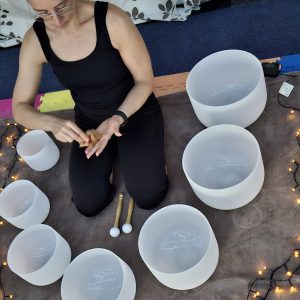
Join Jane Meer for a calming blend of mindful movement and a deeply restorative sound bath. With over 20 years’ experience in yoga and fitness, Jane gently guides you through slow, mindful movement to release tension, followed by soothing sounds from crystal bowls, chimes, and voice.
This two-hour session is designed to calm the nervous system, quiet the mind, and support emotional balance—leaving you feeling rested, grounded, and renewed.
✨ No experience needed—just come as you are.
Book now or purchase a gift voucher: https://kimblesfun.com/product/sound-bath-gift-voucher/
Benefits may include:
• Deep relaxation and reduced stress
• Improved sleep
• Better mood and emotional balance
• Increased clarity and focus
Important:
Please check with a healthcare professional if you have epilepsy, a pacemaker, are pregnant, or have sound sensitivity. Let the instructor know of any concerns, and always listen to your body.
Bring a blanket and a pillow.
***
Sound baths are a form of meditative therapy that use instruments like gongs, singing bowls, and chimes to create soothing sound vibrations that help promote relaxation, reduce stress, and support emotional and physical well-being.
Key Benefits of a Sound Bath :
-
1. Deep Relaxation & Stress Reduction
The gentle vibrations from sound instruments can help lower cortisol (stress hormone) levels and calm the nervous system.
-
Reference: Landry, J. M. (2014). “Physiological and psychological effects of yoga and sound meditation.” Health Psychology Research.
Study participants reported reduced tension and anxiety after sound meditation sessions.
2. Improved Sleep Quality
Sound baths can promote better sleep by easing physical tension and mental chatter.
-
Reference: Garcia-Argibay, M., et al. (2019). “Effects of binaural beats on creativity and cognitive performance.” Psychology of Music.
Auditory stimulation has been shown to improve relaxation and support healthy sleep patterns.
3. Enhanced Mood & Emotional Balance
Sound therapy can positively affect mood, reducing symptoms of depression and anxiety.
-
Reference: Goldsby, T. L., et al. (2017). “Effects of singing bowl sound meditation on mood, tension, and well-being.” Journal of Evidence-Based Integrative Medicine.
Participants experienced significantly less tension, anger, fatigue, and depressed mood after sound meditation.
4. Improved Focus and Mental Clarity
The repetitive and harmonic nature of sound can enhance mindfulness and mental clarity.
-
Reference: Braboszcz, C., et al. (2010). “Increased gamma brainwave activity in experienced meditators.” PLoS One.
Meditation practices, including those involving sound, support cognitive function and mental focus.
5. Energetic & Physical Rebalancing
Sound vibrations can affect the body at a cellular level, helping to release energetic blockages and restore balance.
-
Reference: Perry, C. (2012). “Sound healing practices.” Journal of Holistic Nursing.
Sound therapy can facilitate a sense of harmony in the body and mind by influencing energy flow.
Here are some important precautions and considerations to keep in mind before participating in a sound bath:
⚠️ Sound Bath Precautions
1. Medical Conditions
-
Epilepsy or seizures: Certain frequencies or sudden loud sounds may trigger seizures in sensitive individuals.
-
Heart conditions or pacemakers: Vibrations and electromagnetic fields from instruments may interfere in rare cases—consult your doctor.
-
Hearing sensitivity or tinnitus: Some participants may find certain tones overstimulating or uncomfortable.
2. Pregnancy
-
Sound baths are generally safe during pregnancy, especially in the second and third trimester, but:
-
Avoid very loud or low-frequency instruments placed close to the body.
-
Always check with a healthcare provider before attending.
-
3. Mental Health Considerations
-
People with PTSD, anxiety disorders, or trauma may find deep meditative states unsettling or triggering.
-
Choose a practitioner experienced in trauma-sensitive practices if this applies to you.
-
Inform the facilitator if you’re feeling vulnerable.
-
4. Group Settings
-
Shared spaces may not suit everyone—some people may feel overwhelmed or overstimulated by others’ energy or reactions.
-
Personal space may be limited, so consider your comfort level with proximity to others.
5. Overstimulation or Emotional Releases
-
It’s common to experience strong emotions, tears, or vivid thoughts. This is natural, but be prepared and allow time to ground yourself afterwards.
6. Hydration & Rest
-
Sound work can be detoxifying. Drink water before and after the session.
-
You might feel spaced out, tired, or deeply relaxed—don’t plan anything demanding immediately after.
✅ Recommendations:
-
Arrive with an open mind, but listen to your body.
-
Let the facilitator know about anything relating to your physical & emotional health
-
-


Reviews
There are no reviews yet.